

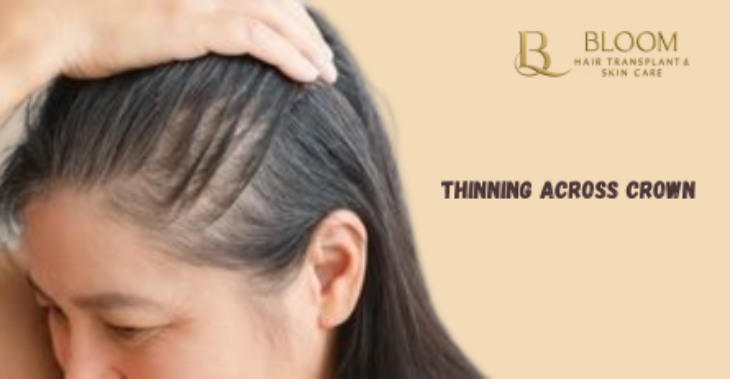
Diffuse Thinning Across Crown: Warning Signs for Women
Hair thinning in women often develops gradually, making it difficult to notice during the early stages. Unlike sudden hair fall or patchy bald spots, diffuse thinning across the crown usually appears slowly over time. Many women first observe subtle changes such as reduced hair volume, a wider partition line, flatter hairstyles, or increased scalp visibility under bright lighting.
Because the changes happen progressively, they are frequently ignored or mistaken for normal hair fall. However, persistent thinning around the crown area should not be overlooked. In many cases, it may indicate hormonal imbalance, nutritional deficiency, stress-related shedding, or early female pattern hair loss.
Across India, increasing stress levels, lifestyle changes, poor sleep habits, nutritional imbalance, pollution exposure, and hormonal concerns have contributed to rising hair thinning complaints among women of different age groups. Hair problems can affect emotional wellbeing deeply because hair is strongly connected to confidence, grooming, and self-image.
The encouraging part is that early awareness can make a major difference. Many forms of diffuse thinning improve when identified early and managed with the right combination of scalp care, nutrition, medical support, and lifestyle changes.
This detailed guide explains the causes, symptoms, warning signs, emotional impact, treatment options, and preventive measures related to diffuse thinning across the crown in women.
What Does Diffuse Crown Thinning Mean?
Diffuse thinning refers to gradual reduction in hair density spread across a larger area of the scalp instead of isolated bald patches.
In women, the crown region and central partition are commonly affected.
Unlike male pattern baldness, many women do not develop completely bald areas. Instead, the hair becomes progressively finer, thinner, and less dense over time.
The scalp may become more visible while overall hair volume decreases.
Early Warning Signs Women Should Watch For
Recognising early changes helps support timely intervention.
Widening Hair Partition
One of the earliest signs is a visibly wider centre partition.
Women often notice that the scalp becomes easier to see near the partition line.
Reduced Hair Volume
Ponytails may feel thinner than before.
Hairstyles that once looked fuller may begin appearing flat.
Increased Scalp Visibility
Bright lighting or wet hair may reveal more scalp exposure than earlier.
Hair Appearing Finer
The texture of the hair may change gradually.
Strands may begin looking weaker or thinner.
Excessive Daily Shedding
Some women notice more hair fall during washing or brushing.
Crown Area Looking Sparse
The crown region may slowly lose density over time.
Common Causes of Diffuse Thinning Across Crown
Hair thinning in women rarely happens because of one single reason.
Several factors may work together.
Hormonal Imbalance
Hormones play a major role in hair growth.
Changes related to:
- PCOS
- Thyroid disorders
- Menopause
- Pregnancy
- Postpartum recovery
- Birth control changes
may affect hair density.
Female Pattern Hair Loss
Genetics can contribute significantly to progressive thinning.
Female pattern hair loss often appears as diffuse thinning across the crown and central scalp.
Unlike sudden shedding, this condition usually develops gradually.
Stress and Emotional Pressure
Chronic stress can affect the hair growth cycle.
Many women notice increased shedding during periods of emotional strain, sleep deprivation, work pressure, or anxiety.
Nutritional Deficiencies
Low levels of:
- Iron
- Protein
- Vitamin D
- Zinc
- Biotin
may weaken hair follicles and contribute to thinning.
Crash dieting and poor eating habits can worsen the condition.
Medical Conditions
Thyroid disorders, autoimmune conditions, chronic illness, and severe infections may affect scalp health.
Heat and Chemical Damage
Frequent straightening, colouring, smoothing, rebonding, and excessive heat styling may weaken hair quality over time.
Poor Scalp Health
Scalp inflammation, dandruff, oil buildup, and irritation may affect follicle health.
Emotional Impact of Hair Thinning in Women
Hair thinning can affect emotional wellbeing deeply.
Many women experience:
- Reduced confidence
- Anxiety about appearance
- Stress during grooming
- Frustration with hairstyling
- Fear of visible baldness
- Social discomfort
Because hair loss in women is often less openly discussed, many individuals suffer silently without seeking proper guidance.
Why Early Diagnosis Matters
Diffuse thinning usually develops gradually.
The earlier the condition is identified, the better the chances of slowing progression and preserving existing follicles.
Ignoring early warning signs may allow thinning to become more noticeable over time.
Early evaluation also helps identify nutritional deficiencies, hormonal imbalance, or medical triggers that may otherwise remain untreated.
Common Mistakes Women Make During Hair Thinning
Ignoring the Problem for Too Long
Many women assume the hair fall will automatically improve.
Trying Random Home Remedies
Using multiple DIY treatments aggressively may irritate the scalp.
Frequent Salon Treatments
Excessive chemical procedures may weaken already vulnerable hair.
Crash Dieting
Rapid weight loss and poor nutrition can worsen thinning.
Self-Medicating Without Proper Evaluation
Hair thinning may require diagnosis before treatment selection.
Importance of Scalp Wellness
Healthy follicles require a healthy scalp environment.
Simple scalp care habits may support healthier growth.
Gentle Cleansing
Use mild products suitable for your scalp type.
Avoid Excessive Heat Styling
High temperatures may increase dryness and breakage.
Maintain Scalp Hygiene
Regular cleansing helps reduce buildup and irritation.
Avoid Tight Hairstyles
Constant traction may worsen thinning around the crown and hairline.
Stay Hydrated
Hydration supports overall skin and scalp health.
Women looking to better understand long-term scalp wellness and healthy recovery practices often explore educational guidance related to hair loss care for better awareness about maintaining stronger scalp health.
Nutrients That Support Hair Health
Protein
Hair structure depends heavily on adequate protein intake.
Iron
Iron deficiency is one of the common causes of diffuse hair thinning in women.
Vitamin D
Vitamin D supports follicle health and scalp function.
Zinc and Biotin
These nutrients support healthier hair quality.
Omega-3 Fatty Acids
Healthy fats may help support scalp nourishment.
When Should You Consult a Specialist?
Professional evaluation becomes important if:
- Hair density continues reducing
- The crown area becomes visibly sparse
- Hair shedding increases suddenly
- The partition line widens noticeably
- Bald patches appear
- Scalp irritation develops
- Hair thinning affects emotional wellbeing
Early medical assessment may help identify underlying triggers before progression becomes advanced.
Diagnosis and Hair Assessment
Doctors may evaluate:
- Hair density
- Scalp condition
- Pattern of thinning
- Hormonal health
- Nutritional status
- Lifestyle habits
- Medical history
- Family history
Blood investigations may sometimes be recommended to identify deficiencies or hormonal imbalance.
Treatment Options for Diffuse Crown Thinning
Treatment depends on the cause and severity of the condition.
Nutritional Correction
Improving nutrient intake may support healthier scalp recovery.
Hormonal Management
Hormonal imbalance may require proper medical support.
Medical Treatments
Doctors may recommend scalp treatments or medications depending on the diagnosis.
PRP Therapy
Platelet-rich plasma therapy may help support follicular stimulation in selected individuals.
Lifestyle Modification
Stress reduction, better sleep, hydration, and balanced nutrition support long-term scalp health.
Hair Restoration Procedures
In advanced cases with stable thinning patterns, restorative procedures may sometimes be considered.
Women researching advanced scalp restoration options often explore personalised treatment approaches available through a Hair Transplant in Mumbai consultation while understanding long-term density improvement possibilities.
Can Diffuse Thinning Be Prevented?
Not every form of thinning can be completely prevented, especially when genetics are involved.
However, healthy lifestyle habits may help reduce worsening.
Maintain Balanced Nutrition
Focus on protein-rich and iron-rich foods.
Reduce Stress
Mental wellbeing affects scalp health significantly.
Sleep Properly
Hair recovery and repair depend heavily on sleep quality.
Avoid Overprocessing Hair
Limiting harsh chemical exposure may reduce damage.
Monitor Hormonal Health
Regular health checkups may help identify underlying concerns early.
Myths About Hair Thinning in Women
“Only Older Women Experience Hair Loss”
Hair thinning can affect women of different age groups.
“Hair Oils Can Reverse All Hair Loss”
Oils may improve scalp conditioning but cannot correct every underlying cause.
“Frequent Washing Causes Baldness”
Hair washing itself does not directly cause permanent hair loss.
“Stress Has No Effect on Hair”
Chronic stress can significantly influence hair shedding.
Long-Term Hair Wellness Tips
Focus on:
- Balanced meals
- Consistent sleep
- Gentle scalp care
- Stress management
- Regular hydration
- Limiting harsh styling
- Avoiding aggressive chemical treatments
Women interested in understanding modern aesthetic hair restoration awareness and realistic expectations often explore insights related to Celebrity Hair Transplant in Mumbai while learning about advanced hair restoration approaches and scalp wellness solutions.
Importance of Acting Early
Many women wait until the scalp becomes visibly sparse before seeking guidance.
Unfortunately, prolonged thinning may become harder to manage if ignored for years.
Early awareness allows more treatment flexibility and improves the chances of preserving existing hair density.
Timely action does not always mean undergoing procedures immediately. In many cases, lifestyle changes, nutritional correction, scalp care, and medical support may help stabilise hair health effectively.
Conclusion
Diffuse thinning across the crown can feel emotionally challenging for many women, especially when the changes become increasingly visible over time. However, understanding the early warning signs and seeking timely guidance can make a meaningful difference.
Hair thinning often reflects a combination of hormonal, nutritional, lifestyle, stress-related, and genetic factors. Recognising these triggers early allows better scalp management and healthier long-term care.
Instead of ignoring persistent thinning or relying solely on internet remedies, women should focus on balanced nutrition, healthy scalp habits, stress management, and professional evaluation when necessary.
Healthy hair recovery begins with awareness, consistency, and proper scalp support.
FAQs
1. What causes diffuse thinning across the crown in women?
Diffuse crown thinning may result from hormonal imbalance, female pattern hair loss, stress, nutritional deficiencies, thyroid disorders, or poor scalp health.
2. Can diffuse hair thinning grow back?
Recovery depends on the underlying cause and stage of thinning. Early diagnosis and proper care may help improve scalp health and preserve hair density.
3. When should women seek help for crown thinning?
Professional evaluation becomes important if thinning continues progressing, scalp visibility increases, or excessive shedding persists for several months.