

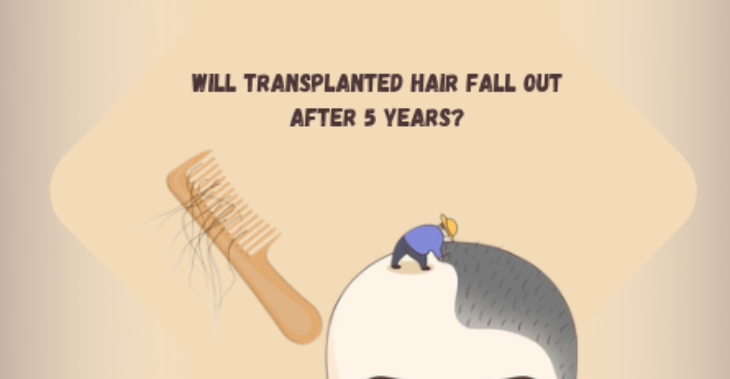
Will Transplanted Hair Fall Out After 5 Years?
One of the most common concerns people have before or after a hair transplant is whether the transplanted hair will remain for life. The question often becomes more important several years after surgery: will transplanted hair fall out after 5 years, even if the initial growth looked satisfactory?
The answer depends on several factors. Hair follicles moved during a transplant are usually taken from areas that are less sensitive to pattern hair loss, commonly at the back or sides of the scalp. These follicles may retain many of their original characteristics after being relocated. However, this does not mean that every transplanted hair is guaranteed to last forever or that the surrounding natural hair will remain unchanged.
A hair transplant redistributes existing follicles; it does not stop the underlying causes of hair loss. The condition of the scalp, the pattern of ongoing hair loss, the quality of the donor area, surgical planning, healing, and long-term hair care can all influence how the scalp looks years later. Understanding these differences helps set realistic expectations and makes it easier to recognise when a change needs medical attention.
Can transplanted hair fall out after five years?
Yes, transplanted hair can thin or fall out after five years, but it is important to understand what kind of hair loss is occurring. Hair that was transplanted from a suitable donor area often continues to grow for many years. Still, individual follicles can be affected by ageing, health conditions, scalp disorders, or other factors. The natural hair around the transplanted area may also continue to thin, which can make the transplant look less dense even when many transplanted follicles are still growing.
Hair grows in cycles. Each follicle passes through a growth phase, a transition phase, and a resting phase before a new strand emerges. It is therefore normal to notice some hairs on a pillow, in the shower, or while combing. A few shed strands do not automatically mean the transplant has failed. Persistent thinning, visible gaps, sudden patchy loss, or a clear change in scalp coverage deserves closer assessment.
The key distinction is between normal hair-cycle shedding, loss of native hair, and a change affecting transplanted follicles. These can look similar to a person observing their scalp at home, but the likely causes and appropriate next steps may differ.
Why transplanted hair often lasts for years
In many people with common pattern hair loss, follicles at the back and sides of the scalp are relatively resistant to the hormonal processes that affect follicles at the front and crown. This is one reason these areas are commonly considered for donor hair. When suitable follicles are carefully selected and transplanted appropriately, they may continue to grow in the recipient area with characteristics similar to those they had in the donor area.
This relative resistance is not an absolute guarantee. Donor characteristics vary from person to person, and not every type of hair loss follows the same pattern. A person’s diagnosis, family history, donor density, hair calibre, scalp health, and age can all influence planning. A transplant assessment should therefore consider the likely progression of hair loss rather than focus only on the area that appears thin at the time of treatment.
It is also important to distinguish follicle survival from the appearance of density. A follicle may continue producing hair, but the overall result can look less full if nearby natural hair becomes thinner, hair shafts become finer with age, or the hairstyle and hair length change. The appearance of the transplant over time is not determined by transplanted follicles alone.
Reasons hair may appear thinner after five years
- Ongoing loss of natural hair: A transplant does not prevent non-transplanted hair from becoming thinner. If the native hair behind or between transplanted areas continues to recede, the contrast can create a less even appearance. This is particularly relevant when hair loss progresses after the original treatment plan was made.
- Age-related changes: Hair density, texture, and growth rate can change with age. Some people notice that their hair becomes finer or grows more slowly. Such changes may affect transplanted and non-transplanted hair, although the extent varies between individuals.
- The underlying hair-loss condition: Pattern hair loss is a long-term condition for many people. Other conditions, including inflammatory scalp disorders or certain types of alopecia, may also affect hair. If the original diagnosis was incomplete or a different condition develops later, the scalp may change despite an earlier transplant.
- Temporary shedding linked to health or stress: Illness, fever, surgery, rapid weight loss, nutritional deficiencies, or significant stress can sometimes trigger increased shedding. This type of shedding may occur months after a trigger and does not necessarily mean transplanted follicles have permanently stopped working. The cause and recovery pattern should be assessed rather than assumed.
- Scalp inflammation or other medical problems: Persistent itching, redness, scaling, pain, pustules, or scarring are not simply cosmetic concerns. Some scalp conditions can affect follicle health and need treatment. Avoid starting medicated lotions or oral medicines without appropriate advice.
- Expectations about density: A transplant can improve coverage, but it cannot create unlimited density. Hair characteristics, the number of available donor follicles, the size of the thinning area, and the way hair is styled all influence the final look. A change in appearance does not always indicate that the transplanted hair itself has fallen out.
Does transplanted hair go through shedding?
Shedding is part of the normal hair cycle. After a transplant, some of the visible hair shafts may shed while the transplanted follicles remain in place and later produce new growth. This early phase is different from permanent follicle loss. Years after surgery, normal daily shedding can still occur because transplanted hair continues to participate in hair-growth cycles.
A person may notice more shedding during a period of illness, stress, nutritional imbalance, or a change in health. For general background on this pattern, the article on Sudden Hair Shedding discusses why increased shedding can occur after illness. However, an online article cannot establish the cause of an individual’s hair loss.
Do not judge the health of a transplant by counting loose strands on a single day. Look instead for a sustained change in density, widening areas of visible scalp, changes in the hairline, or symptoms affecting the scalp. Photographs taken under similar lighting and from the same angles over time may help a clinician assess whether a genuine change has occurred.
What influences long-term hair transplant results?
Donor-area quality: The donor area needs enough suitable follicles to support the planned coverage without leaving it visibly depleted. Density, hair thickness, curl, colour contrast with the scalp, and the stability of the donor region all matter. A limited donor supply should be managed carefully because it cannot be replenished simply by repeating surgery.
Diagnosis and planning: Hair loss may progress over many years. A responsible plan considers likely future thinning, the person’s age, family history, pattern of loss, scalp condition, and expectations. Planning only for the current hairline can create difficulties if the surrounding natural hair continues to recede.
Surgical technique and handling: Follicle extraction, storage, handling, placement, and the clinical team’s approach can influence the treatment process. Technique alone does not guarantee a particular result; suitability and careful execution matter. People should ask for a clear explanation of the proposed approach, limitations, risks, and aftercare.
Healing and aftercare: Following the treating clinician’s instructions can help protect the scalp during recovery. Avoiding unadvised rubbing, scratching, harsh products, or strenuous activity during the period specified by the clinician may be important. Long-term scalp care should be adapted to the individual rather than based on a one-size-fits-all routine.
General health and hair condition: Nutrition, certain medicines, hormonal or medical conditions, and scalp disease can influence hair health. A balanced diet supports general wellbeing, but supplements do not reliably reverse every form of hair loss. Testing or treatment should be based on clinical assessment, not on assumptions or marketing claims.
Can natural hair loss make a transplant look unsuccessful?
Yes. This is one of the main reasons a transplant may look different after several years. The transplanted follicles may still be producing hair, while the original hair around them becomes thinner. As the contrast increases, the hairline or crown can appear uneven or less dense. This is not necessarily evidence that all transplanted hair has been lost.
The long-term plan should account for the possibility that pattern hair loss may continue. Depending on the diagnosis and the person’s medical history, a clinician may discuss observation, medical management, or other options. Medicines used for hair loss have specific indications, contraindications, and possible side effects, so they should be considered with a qualified medical professional.
If you are reviewing treatment options or follow-up information from a hair transplant clinic in Mumbai, focus on whether the consultation explains the cause of hair loss, the limits of donor supply, the possibility of future thinning, risks, and follow-up care. A clinic name or website alone cannot establish whether a particular treatment is appropriate for you.
Can another hair transplant be done after five years?
A second procedure may be considered in selected cases, but the passage of five years alone does not mean another transplant is needed or advisable. The first step is to understand why the appearance has changed. If native hair has continued to thin, if there is an untreated scalp condition, or if the donor area has limited reserves, a repeat procedure may not be the right immediate answer.
An assessment may include reviewing the original treatment plan, examining the recipient and donor areas, checking for signs of inflammation or scarring, and discussing the timeline of the change. The clinician may also consider whether the hair-loss pattern has stabilised and whether non-surgical management is appropriate. Further surgery should not be treated as an automatic solution to every concern about density.
Donor hair is a finite resource. Repeated extraction without careful planning can reduce donor density and may leave visible thinning in the donor area. Any discussion of another procedure should include realistic benefits, limitations, risks, alternative options, and the effect it could have on future treatment choices.
How to care for transplanted hair over the long term
Long-term care is less about using a large number of products and more about maintaining a healthy scalp and following advice that fits your condition. Clean the scalp as instructed, choose products that do not irritate your skin, and avoid aggressive scratching or frequent chemical treatments if they cause breakage or irritation. If you have persistent dandruff, itching, redness, or soreness, seek advice instead of repeatedly switching products.
A balanced diet with adequate protein and a variety of nutrient-rich foods supports normal hair growth. If shedding is persistent, a clinician may decide whether tests for nutritional deficiencies or other medical factors are appropriate. Taking high-dose supplements without evidence of a deficiency is not a reliable substitute for diagnosis and may be unsuitable for some people.
Sleep, stress management, and general health habits are useful for overall wellbeing. They cannot guarantee that hair loss will stop, and they should not be presented as a cure for genetic pattern hair loss. If a treatment has been prescribed, discuss concerns or side effects with the prescriber before changing or stopping it.
For practical background on routine scalp habits, the guide to hair transplant care may be useful. Follow the specific post-procedure instructions provided by your own treating team, since recommendations can differ depending on the procedure, healing stage, and individual medical needs.
Warning signs that should not be ignored
Arrange a medical assessment if you notice persistent or rapidly increasing thinning, a new bald patch, a sudden change in the hairline, or loss that continues beyond what seems typical for you. Assessment is also advisable when hair loss is accompanied by scalp pain, redness, marked itching, scaling, sores, discharge, or areas that appear shiny or scarred.
Seek prompt medical advice for sudden, extensive hair loss or symptoms that suggest infection or significant inflammation. If shedding follows a major illness, surgery, substantial weight change, or a new medicine, share the timing and relevant details with the clinician. Do not stop a prescribed medicine without discussing it with the prescriber.
A Hair transplant Surgeon in Mumbai or another appropriately qualified medical professional can assess the scalp and discuss whether the change is related to natural hair-cycle shedding, ongoing pattern hair loss, a scalp condition, or another cause. The important step is a proper evaluation, not assuming that every change requires another procedure.
What to expect during a medical assessment
A useful consultation begins with your timeline: when the change started, whether it is gradual or sudden, and whether you have noticed symptoms elsewhere on the scalp. The clinician may ask about family history, recent illness, stress, weight changes, diet, medicines, previous treatments, and the original transplant procedure.
The scalp and donor area may be examined to assess density, hair calibre, distribution, and signs of inflammation or scarring. Depending on the findings, the clinician may recommend monitoring, selected investigations, treatment for an identified scalp condition, or a discussion about ongoing hair-loss management. Not everyone needs blood tests, medication, or another procedure.
Bring details of previous treatments and any medicines or supplements you use. If you have photographs from earlier years, they may help show how the pattern has changed. A careful assessment should explain what is known, what remains uncertain, and which options are reasonable for your situation.
So, will transplanted hair fall out after 5 years? It can thin or shed, but transplanted hair taken from a suitable donor area often continues to grow for many years. The appearance of a transplant can still change because natural hair loss may progress, hair characteristics can change with age, or health and scalp conditions may affect shedding.
The most useful approach is to understand the difference between normal hair-cycle shedding, continued loss of native hair, and a problem affecting the scalp. Maintain sensible hair-care habits, follow personalised medical advice, and seek an assessment if thinning is persistent, sudden, patchy, or accompanied by scalp symptoms. A realistic long-term plan should consider both current hair coverage and the possibility of future changes.
FAQs
- Is transplanted hair permanent?
Transplanted follicles from a suitable donor area often continue to grow for many years, but permanence cannot be guaranteed for every follicle or every person. Ageing, donor characteristics, scalp conditions, and the progression of natural hair loss can affect the appearance over time. - Can transplanted hair fall out after 10 years?
It is possible for hair to thin or shed many years after a transplant. Some changes may be part of the normal hair cycle or ageing, while others may relate to ongoing pattern hair loss or a medical scalp condition. Persistent or noticeable changes should be assessed rather than assumed to be normal. - Do I need another hair transplant if density reduces after five years?
Not necessarily. First, a clinician should determine whether the change is due to native hair loss, temporary shedding, a scalp problem, or another cause. A second procedure is only one possible option and may not be suitable if donor reserves are limited or the hair-loss pattern is still changing.