

What Happens 10 Days After a Hair Transplant? Recovery, Scabs and Aftercare
A hair transplant may be over in a few hours, but the recovery process takes considerably longer. Around the tenth day, many patients begin examining their scalp more closely. Some notice that the scabs are coming off, others still have redness or itching, and a few become worried when they see small hairs falling out during washing.
One common question is: What should a hair transplant look like after 10 days?
By this stage, the initial healing period is usually progressing. Swelling and tenderness may have reduced, the transplanted area may be easier to manage, and some of the small crusts around the grafts may begin to loosen. However, the scalp is not necessarily back to its normal condition, and the transplanted hair is still at an early stage of recovery.
It is also important to understand that the appearance of your scalp on day 10 does not tell you how successful the final result will be. Hair growth after transplantation follows a longer cycle, and visible changes take several months.
Here is what you can generally expect 10 days after a hair transplant, how to care for your scalp and which signs should not be ignored.
What Does Your Scalp Look Like 10 Days After a Hair Transplant?
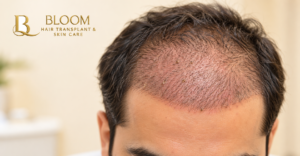
By day 10, the scalp has usually moved beyond the immediate post-surgery phase. The small openings created during graft placement begin healing, and the crusts formed around them gradually loosen.
However, recovery is not identical for everyone. The appearance of your scalp depends on factors such as the technique used, the number of grafts placed, your skin’s healing response and how closely you have followed the aftercare instructions.
Some changes you may notice include:
- Fewer visible scabs: Small crusts may start falling away naturally during gentle washing.
- Reduced swelling: Forehead or facial swelling, if it occurred, generally settles during the earlier recovery period.
- Mild redness: The transplanted area may still look pink or slightly red.
- Occasional itching: As the skin heals, you may experience dryness or itching.
- Less tenderness: Discomfort around the donor and recipient areas may have reduced.
- Changes in hair appearance: Some transplanted hair shafts may come away with the crusts or begin shedding in the following weeks.
These changes are generally part of the healing process. However, increasing pain, spreading redness, pus-like discharge or fever should not be treated as routine recovery symptoms.
What Happens to the Transplanted Grafts on Day 10?
Understanding the difference between a hair shaft and a hair follicle can help reduce unnecessary worry during recovery.
A hair graft is a small unit of tissue containing one or more hair follicles. During transplantation, these grafts are carefully taken from the donor area, usually the back or sides of the scalp, and placed into the areas where hair is thinning.
After placement, the surrounding skin begins healing. Small crusts form around the graft sites, and the follicles gradually settle into their new locations.
By the tenth day, the grafts have generally become more secure than they were immediately after surgery. However, this does not mean you should start rubbing, scratching or aggressively washing the recipient area.
Continue following the washing and scalp-care routine provided by your surgeon.
An important point: Seeing a hair shaft attached to a falling scab does not automatically mean the transplanted follicle has been lost. The visible hair and the living follicular structure beneath the skin are not the same thing.
Hair Transplant Scabs on Day 10: Should You Be Worried?
Scabs are one of the most noticeable features of early hair transplant recovery. They form when small amounts of blood and fluid dry around the sites where grafts have been placed.
During the first few days, these crusts protect the healing skin. Over time, they become dry and gradually loosen.
Around days 7 to 14, many patients notice that the scabs begin falling away during washing. Some people may have very few remaining by day 10, while others may need a little longer.
Should You Remove the Scabs Yourself?
No. Avoid picking, scratching or pulling off scabs with your fingernails.
Removing them forcefully can irritate the healing skin, cause bleeding and potentially disturb grafts that are still settling.
Your clinic may provide a specific washing method for loosening the remaining crusts once the scalp has reached the appropriate stage of healing. Follow that method rather than trying to speed up the process yourself.
What Does the Scalp Look Like After Scabs Fall Off?
Once the crusts come away, you may notice:
- Small red or pink spots around the transplanted area.
- Short hair shafts remaining in some locations.
- Areas that appear less dense than they did immediately after surgery.
- Mild sensitivity or dryness.
The scalp may look uneven at this stage. This is not a reliable indication of the final hair density.
Why Is Transplanted Hair Falling Out After 10 Days?
This is one of the most common concerns after hair restoration.
Patients may notice hair strands coming away during washing, while drying the scalp or when the scabs naturally fall off. It can be unsettling, especially when the purpose of the procedure was to restore lost hair.
However, temporary shedding is a recognised part of the hair transplant recovery process.
What Is Shock Loss After a Hair Transplant?
Shock loss refers to temporary shedding that can occur after hair transplantation. The procedure involves handling and relocating hair follicles, and the surrounding tissue experiences a period of healing.
As part of this process, the visible hair shafts may shed while the follicles remain beneath the skin.
This shedding commonly becomes noticeable during the following weeks, although the timing varies between patients.
Does Hair Falling Out Mean the Transplant Has Failed?
Not necessarily.
A transplanted hair shaft falling out does not automatically mean the follicle has been lost. In many cases, the follicle remains in the scalp and enters a resting phase before producing new hair later.
However, not every instance of hair loss should automatically be assumed to be normal shedding. If you notice sudden bleeding, significant pain, unusual discharge or a specific area that appears damaged, contact your clinic for an assessment.
For a better understanding of why hair may fall out after illness, stress or other triggers, you can also read about sudden hair shedding after illness.
Hair Transplant Recovery Timeline: Day 1 to Day 10
The first ten days involve several stages of healing. Knowing what generally happens during this period can help you understand why the scalp changes from one day to another.
| Recovery stage | What you may notice |
| Days 1–2 | Mild swelling, redness, tenderness and small crusts around the grafts. The scalp requires careful protection. |
| Days 3–4 | Crusts become more noticeable. Some patients may experience itching or tightness. |
| Days 5–7 | Swelling and discomfort often begin settling. Crusts may start loosening with the prescribed washing routine. |
| Days 8–10 | More scabs may fall away naturally. Redness, mild itching or sensitivity can remain. |
| Days 11–14 | The recipient area often becomes easier to manage, with many crusts clearing during this period. |
This is a general guide, not a fixed schedule. Your recovery may be faster or slower depending on the procedure and your individual healing response.
How to Wash Your Hair 10 Days After a Hair Transplant
Washing your scalp correctly is an important part of recovery. It helps keep the area clean and allows loosened crusts to come away gradually.
However, the exact washing method depends on your surgeon’s protocol. Some clinics introduce gentle contact earlier, while others use a more gradual approach.
Around day 10, your clinic may allow you to wash the recipient area more thoroughly than during the first few days. Do not assume that you can immediately return to your old washing routine.
Follow These Hair Washing Precautions
- Use the shampoo recommended by your clinic.
- Use lukewarm water rather than very hot water.
- Avoid directing strong shower pressure at the transplanted area.
- Follow the washing technique demonstrated by your medical team.
- Do not scratch the scalp to remove stubborn crusts.
- Avoid vigorous towel drying.
- Pat the scalp gently or allow it to dry as instructed.
If some scabs remain firmly attached, do not force them off. Ask your clinic whether your washing technique needs to be adjusted.
You can explore more practical guidance on hair transplant care and recovery to understand the importance of following an appropriate aftercare routine.
What Activities Can You Resume After 10 Days?
By the tenth day, many patients feel more comfortable performing routine activities. However, returning to exercise, sports or physically demanding work should depend on the condition of the scalp and the instructions provided by the surgeon.
Here is a general guide:
Activity | General guidance around day 10 |
Walking | Usually possible earlier, as comfort allows. |
Office work | Many patients can return earlier if they feel comfortable. |
Gentle daily activities | Usually manageable, depending on recovery. |
Heavy exercise | Resume only when your surgeon clears you. |
| Swimming | Usually avoided during the early healing period; wait for medical clearance. |
| Helmet use | Ask your surgeon when it is safe to wear one without putting pressure on the scalp. |
| Hair styling products | Avoid until your clinic confirms that the scalp has healed sufficiently. |
| Direct sunlight | Continue protecting the scalp from strong, direct sun exposure. |
Mumbai’s weather can make recovery slightly more challenging for people who spend long hours outdoors. Heat, humidity, dust and sweating can make scalp care uncomfortable.
If you need to travel for work, keep your scalp protected as advised and avoid tight headwear that rubs against the recipient area.
What Is Normal on Day 10 and What Needs Medical Attention?
Not every change after surgery indicates a problem. It is useful to distinguish between common healing symptoms and signs that require medical review.
Common recovery changes | Symptoms that need medical attention |
Mild redness around graft sites | Redness that spreads or becomes increasingly painful |
Small scabs loosening naturally | Pus-like discharge or an unpleasant smell |
Occasional itching | Severe or worsening itching with inflammation |
Mild sensitivity | Increasing or severe pain |
Some hair shafts falling out | Bleeding or sudden changes associated with trauma |
| Gradual reduction in swelling | New or worsening swelling with fever or other symptoms |
If you experience fever, increasing pain, significant bleeding, pus-like discharge or spreading redness, contact your treating clinic promptly.
Do not apply home remedies, strong antiseptics or unprescribed creams to the scalp to manage these symptoms.
Why Does the Hair Transplant Look Less Dense After 10 Days?
Some patients feel that their hair transplant looked fuller immediately after the procedure than it does around day 10.
This can happen because the initial appearance includes the visible transplanted hair shafts, small crusts and sometimes surrounding swelling. As the scalp heals and crusts come away, the appearance changes.
Temporary shedding may also begin in the following weeks.
It is important to remember that a hair transplant is not an instant hair-growth procedure. The follicles need time to settle, pass through their natural growth cycle and produce new hair.
When Does New Hair Growth Usually Start?
The timeline differs between individuals, but the general pattern is:
- First few weeks: Transplanted hair shafts may shed.
- Around 3–4 months: Early new growth may begin to become noticeable in some patients.
- Around 6 months: More visible changes in hair growth may develop.
- Around 9–12 months: Hair growth and appearance continue to mature.
- 12 months and beyond: Some patients may continue to see changes in thickness and overall appearance.
These are approximate stages, not guaranteed milestones. The final outcome depends on factors such as donor hair quality, graft survival, the underlying hair-loss condition and individual growth patterns.
Does the Donor Area Also Need Care After 10 Days?
Yes. Hair transplant aftercare does not end with the transplanted area at the front or top of the scalp.
The donor area, usually located at the back or sides of the head, also needs time to heal.
After FUE (Follicular Unit Extraction), small extraction points may leave tiny marks that gradually heal. Some patients experience temporary redness, tightness, itching or sensitivity.
With FUT (Follicular Unit Transplantation), the donor area has a linear incision that requires its own wound-care instructions. If non-absorbable stitches have been used, their removal is scheduled according to the surgeon’s advice.
Avoid scratching or applying unapproved products to the donor area. If you notice increasing pain, discharge, swelling or wound separation, contact your clinic.
What Factors Can Affect Hair Transplant Recovery?
Two patients who undergo hair transplantation on the same day may not have identical recovery experiences.
Several factors can influence how the scalp heals.
1. Hair Transplant Technique
FUE and FUT involve different donor-area approaches. The type of procedure can influence the appearance and healing requirements of the donor region.
2. Number of Grafts
The number of grafts and the size of the treated area may affect the extent of early redness, crusting and overall scalp care requirements.
3. Individual Healing Response
Skin sensitivity, general health, existing medical conditions and personal healing patterns can influence recovery.
4. Aftercare Routine
Following washing instructions, avoiding unnecessary pressure and attending follow-up appointments can help reduce avoidable problems during recovery.
5. Existing Hair and Scalp Conditions
Some patients may have ongoing hair thinning, scalp inflammation or other dermatological concerns. These conditions may need separate attention alongside the transplant recovery plan.
What Should You Ask Your Hair Transplant Surgeon at the Day 10 Follow-Up?
A follow-up appointment gives your surgeon an opportunity to review healing and address concerns before you return to your regular routine.
Rather than relying only on photographs or general online advice, use the appointment to clarify what is appropriate for your scalp.
Consider asking:
- Is the recipient area healing as expected?
- Are the remaining scabs ready to loosen through the recommended washing method?
- Can I return to my regular shampoo?
- When can I resume exercise and outdoor activities?
- Is my donor area healing normally?
- When should I expect temporary shedding?
- When is my next follow-up appointment?
If you are considering a procedure or want to understand the recovery process before making a decision, speaking with an experienced hair transplant surgeon in Mumbai can help you understand the treatment plan and the aftercare involved.
Hair Transplant Recovery at Bloom Hair Transplant Clinic, Mumbai
Hair transplantation involves more than placing grafts into areas of thinning. Proper planning, careful execution and appropriate post-procedure guidance are all important parts of the treatment journey.
At Bloom Hair Transplant Clinic in Mumbai, patients can discuss their hair-loss concerns, suitability for transplantation and the recovery process with the medical team.
Dr. Vinod Sonawane and the clinic team can guide patients through relevant treatment considerations, including donor-area assessment, hairline planning, graft requirements and postoperative care.
Patients should understand that hair restoration is a gradual process. The scalp’s appearance during the first ten days is only one stage of recovery and should not be used to judge the final outcome.
The clinic’s approach to treatment planning and patient guidance is explained further in about Bloom Hair Transplant Clinic in Mumbai.
What Should You Expect After the First 10 Days?
After day 10, the focus gradually shifts from protecting the early graft sites to allowing the scalp to complete its healing process.
The remaining crusts may continue to loosen, redness may gradually reduce and normal activities can be reintroduced according to your surgeon’s advice.
You may also enter the temporary shedding phase over the following weeks. This can make the transplanted area look thinner for some time, but it is not automatically a sign that the procedure has failed.
Avoid judging the result too early. Hair follicles follow natural growth cycles, and visible improvement takes months rather than days.
The most useful thing you can do is maintain your follow-up schedule, follow the aftercare plan and contact your clinic if something does not look or feel right.
Book a Hair Transplant Consultation in Mumbai
The tenth day after a hair transplant is an important point in the recovery journey, but it is not the final stage. Scabs may be clearing, the scalp may still look slightly red and temporary shedding may occur in the weeks ahead.
If you have concerns about your recovery, it is better to have your scalp assessed rather than trying to interpret every change on your own.
At Bloom Hair Transplant Clinic, Mumbai, patients can discuss their hair restoration goals, treatment suitability and postoperative care with the clinic team.
For consultation or further information, get in touch with Bloom Hair Transplant Clinic and discuss your concerns with the medical team.
Frequently Asked Questions
1. Is it normal to have scabs 10 days after a hair transplant?
Yes. Some patients may still have small scabs around day 10. They generally begin loosening during the first one to two weeks. Follow your clinic’s washing instructions and avoid picking or scratching them.
2. Can I touch my transplanted hair after 10 days?
The level of contact allowed depends on your surgeon’s aftercare protocol and how your scalp is healing. Gentle washing may be permitted, but avoid scratching, rubbing or applying unnecessary pressure to the recipient area.
3. Will transplanted hair fall out after 10 days?
Some transplanted hair shafts may fall out with naturally loosening scabs or during the following weeks. This can be part of the normal shedding phase. The visible hair shaft falling out does not necessarily mean the follicle has been lost.
4. Can I wash my hair normally after 10 days?
Some patients can gradually move towards a more normal washing routine around this stage. However, the exact timing and technique depend on the surgeon’s instructions. Avoid aggressive rubbing or strong water pressure until you have been advised that it is safe.
5. When will I see new hair growth after a hair transplant?
Early new growth may become noticeable around three to four months after surgery in some patients. More visible changes generally develop over the following months, with results continuing to mature around the one-year mark or longer. Individual timelines vary.
Medical Disclaimer
This article is intended for general informational and educational purposes only. Hair transplant recovery varies between individuals, and the information provided should not be considered a substitute for medical advice, diagnosis or personalised postoperative instructions. Always follow the guidance of your treating surgeon and contact your clinic if you experience unusual or worsening symptoms.