

Robotic Hair Transplant: Precision vs Manual Methods Explained
Hair restoration has evolved significantly over the past decade. Earlier, hair transplant procedures were often associated with visible scars, long recovery periods, and unnatural-looking results. Today, advanced technology and refined techniques have transformed the way hair restoration is approached.
Among the modern developments gaining attention is robotic hair transplant technology. Many individuals researching hair restoration now come across terms such as robotic FUE, AI-assisted extraction, automated graft harvesting, and precision-assisted hair transplantation.
At the same time, manual hair transplant techniques continue to remain widely trusted and commonly performed by experienced hair restoration specialists.
This naturally creates an important question for patients:
Which option is better — robotic hair transplant or manual methods?
The answer is not always straightforward. Both approaches have advantages, limitations, and suitability depending on the individual’s scalp condition, hair characteristics, donor quality, and restoration goals.
Across India, awareness regarding modern hair transplant techniques has increased rapidly because more individuals are now exploring aesthetic restoration options at younger ages. However, confusion also exists because many people assume robotic procedures automatically guarantee better outcomes.
In reality, successful hair restoration depends on multiple factors beyond technology alone.
This detailed guide explains robotic hair transplant methods in simple language, compares them with manual techniques, discusses precision differences, graft handling, recovery, limitations, patient suitability, and helps individuals understand how informed decisions are made in modern hair restoration planning.
What Is a Robotic Hair Transplant?
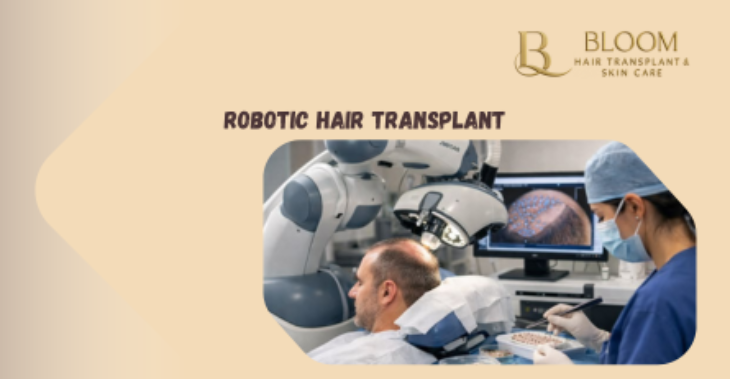
A robotic hair transplant is an advanced hair restoration approach where specialised robotic technology assists during specific stages of follicular unit extraction (FUE).
The robotic system uses:
- Imaging technology
- Artificial intelligence support
- Digital mapping
- Automated precision tools
to assist in identifying and extracting follicular units.
The system helps improve consistency during graft harvesting in selected cases.
Understanding Manual Hair Transplant Methods
Manual hair transplant techniques are performed directly by experienced surgeons and trained medical teams.
In manual FUE procedures, graft extraction is performed using handheld instruments.
The surgeon carefully evaluates:
- Hair angle
- Hair direction
- Follicle depth
- Donor density
- Scalp flexibility
throughout the procedure.
Manual techniques rely heavily on surgical expertise, precision, planning, and artistic judgement.
What Is FUE?
Both robotic and manual methods are commonly linked with FUE.
FUE stands for Follicular Unit Extraction.
During FUE:
- Individual follicular units are extracted
- Grafts are prepared carefully
- Recipient areas are designed
- Follicles are implanted strategically
FUE is widely preferred because it avoids large linear scars associated with older strip techniques.
Why Robotic Hair Transplant Technology Became Popular
Technology-driven procedures often attract attention because of their advanced image and precision-focused marketing.
Robotic systems were introduced to:
- Improve extraction consistency
- Reduce operator fatigue
- Support graft harvesting accuracy
- Assist large-session planning
- Improve digital scalp mapping
However, robotic assistance still requires proper surgical supervision.
Precision in Robotic Hair Transplant
Robotic systems use imaging analysis to identify follicular units.
The technology attempts to:
- Detect follicle angles
- Analyse graft grouping
- Select extraction patterns
- Minimise excessive donor harvesting
The system may help maintain consistent extraction speed in selected candidates.
Precision in Manual Hair Transplant
Manual procedures rely more heavily on surgeon experience and real-time judgement.
Experienced surgeons can adapt dynamically during the procedure.
This becomes important because scalp conditions vary between individuals.
Manual extraction allows flexibility when handling:
- Curved follicles
- Irregular growth patterns
- Variable scalp thickness
- Complex donor areas
Many experts believe artistic judgement remains one of the strongest advantages of manual methods.
Key Differences Between Robotic and Manual Methods
Technology Involvement
Robotic procedures use automated assistance.
Manual methods depend directly on surgical skill and precision.
Flexibility During Surgery
Manual techniques may offer greater adaptability in complex scalp conditions.
Extraction Speed
Robotic systems may support faster extraction in selected cases.
Artistic Hairline Design
Hairline creation usually depends heavily on surgeon planning rather than robotic automation.
Learning Curve
Robotic systems still require trained teams and supervision.
Does Robotic Technology Replace the Surgeon?
No.
This is one of the biggest misconceptions.
Even with robotic assistance:
- Surgical planning matters
- Hairline design matters
- Graft placement matters
- Donor management matters
- Natural aesthetics matter
Human expertise continues playing a major role in the overall outcome.
Importance of Hairline Design
Natural-looking results depend heavily on artistic planning.
Hairline design must consider:
- Facial proportions
- Age
- Hair density
- Future thinning progression
- Ethnic hair characteristics
This aspect still depends strongly on human judgement and experience.
Graft Survival and Handling
Careful graft handling is extremely important.
Healthy graft survival depends on:
- Gentle extraction
- Proper hydration
- Minimal trauma
- Controlled implantation timing
Both robotic and manual approaches require proper medical protocols to protect follicular health.
Who May Be Suitable for Robotic Hair Transplant?
Some individuals may be considered suitable candidates if they have:
- Stable donor density
- Straight hair characteristics
- Predictable follicle direction
- Suitable scalp conditions
However, suitability varies between individuals.
Situations Where Manual Expertise Becomes Important
Manual methods may offer advantages in:
- Curly hair
- Irregular follicles
- Complex donor patterns
- Scarred scalp areas
- Advanced restoration planning
- Artistic density work
Experienced judgement often becomes especially valuable in customised cases.
Recovery After Robotic vs Manual Hair Transplant
Recovery patterns may appear similar because both approaches usually involve FUE-based extraction.
Patients may experience:
- Mild redness
- Temporary scabbing
- Short recovery period
- Temporary shedding phase
Recovery depends more on:
- Surgical quality
- Scalp care
- Post-procedure guidance
- Individual healing response
than the technology name alone.
Importance of Donor Area Management
The donor area is extremely valuable.
Overharvesting can reduce future restoration flexibility.
Proper donor planning helps maintain:
- Balanced density
- Natural appearance
- Long-term restoration possibilities
This requires careful judgement regardless of robotic or manual approach.
Individuals researching scalp preservation and long-term maintenance often explore educational guidance related to hair loss care to better understand donor health, scalp wellness, and preventive hair management.
Common Myths About Robotic Hair Transplant
“Robotic Means Perfect Results”
Technology may improve consistency, but results still depend heavily on surgical planning and expertise.
“Manual Methods Are Outdated”
Manual techniques continue to be widely respected and commonly used globally.
“Robotic Procedures Are Completely Automatic”
Human supervision remains essential throughout the process.
“Technology Alone Guarantees Natural Density”
Natural appearance depends heavily on artistic implantation and long-term planning.
Emotional Expectations and Reality
Many individuals approach hair restoration with high emotional expectations.
It is important to understand:
- Results develop gradually
- Hair growth takes time
- Density may improve progressively
- Final outcomes require patience
Unrealistic expectations often create unnecessary disappointment.
Importance of Choosing the Right Clinic
Technology alone does not determine quality.
When evaluating a clinic, patients should focus on:
- Surgical expertise
- Hairline planning
- Donor management
- Hygiene standards
- Patient education
- Realistic counselling
Individuals researching advanced restoration options often explore consultations at a Hair Transplant Clinic in Mumbai to better understand personalised treatment planning and modern restoration approaches.
Is Robotic Hair Transplant Painful?
Most modern hair transplant procedures are performed under local anaesthesia.
Patients may experience:
- Mild discomfort
- Temporary tightness
- Short-term sensitivity
Recovery experiences vary individually.
Cost Considerations
Robotic procedures may sometimes involve higher equipment-related costs.
However, pricing varies depending on:
- Clinic expertise
- Graft requirement
- Procedure complexity
- Technology used
- Treatment planning
Patients should avoid making decisions based only on pricing or marketing terms.
Long-Term Hair Loss Planning Matters
Hair restoration should consider future thinning patterns.
This becomes especially important in younger individuals.
Long-term planning focuses on:
- Preserving donor area
- Maintaining natural appearance
- Anticipating future hair loss
- Balanced density design
Can Women Undergo Robotic Hair Transplant?
In selected cases, women may also be considered for advanced FUE techniques.
Suitability depends on:
- Hair loss pattern
- Donor quality
- Scalp health
- Medical evaluation
Lifestyle Habits Supporting Better Hair Health
Long-term scalp wellness also depends on healthy habits.
Balanced Nutrition
Protein, iron, zinc, and vitamins support healthier follicles.
Proper Sleep
Hair recovery and tissue repair depend heavily on sleep quality.
Stress Management
Stress may worsen ongoing thinning.
Gentle Scalp Care
Healthy scalp maintenance supports long-term follicle health.
The Role of Realistic Consultation
Ethical consultation focuses on:
- Honest expectations
- Individual suitability
- Long-term planning
- Donor preservation
- Scalp assessment
Every patient requires personalised evaluation rather than one standard approach.
People interested in understanding advanced aesthetic restoration awareness often explore insights related to Celebrity Hair Transplant in Mumbai while learning about modern restoration approaches, natural hairline planning, and long-term confidence-building solutions.
Conclusion
Robotic hair transplant technology has added a new level of precision and innovation to modern hair restoration. However, technology alone does not determine successful results.
Both robotic and manual methods have strengths, and the right approach depends on the individual’s scalp condition, donor characteristics, hair goals, and long-term planning needs.
Natural-looking outcomes rely heavily on careful surgical judgement, artistic hairline design, healthy graft handling, and realistic patient expectations.
Instead of focusing only on technology-driven marketing, individuals should prioritise informed consultation, scalp health, donor preservation, and experienced medical guidance.
Hair restoration works best when precision, planning, and personalised care come together thoughtfully.
FAQs
1. Is robotic hair transplant better than manual hair transplant?
Both methods have advantages. The best option depends on scalp condition, donor quality, hair characteristics, and surgical planning.
2. Does robotic hair transplant give more natural results?
Natural results depend more on hairline design, graft placement, and surgeon expertise rather than technology alone.
3. Is robotic hair transplant completely automatic?
No. Robotic systems assist certain stages of the procedure, but surgical supervision and planning remain extremely important.