

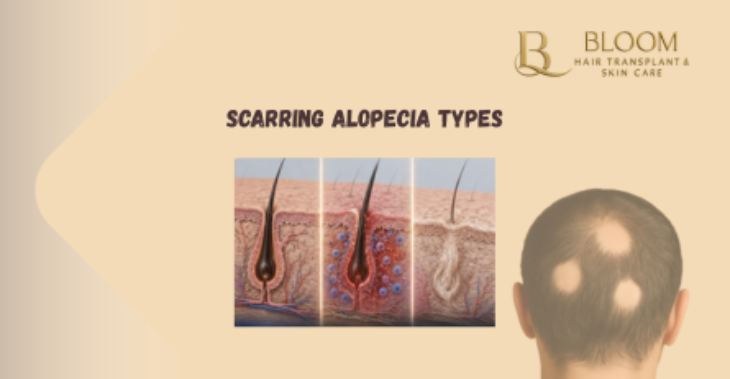
Scarring Alopecia Types: What Causes Permanent Baldness?
Hair loss can happen for many different reasons. Some people experience temporary shedding after illness or stress, while others notice gradual thinning linked to genetics or hormonal imbalance. However, certain hair loss conditions are more serious because they involve permanent damage to the hair follicles themselves. These conditions are commonly known as scarring alopecia.
Scarring alopecia, also called cicatricial alopecia, refers to a group of inflammatory scalp disorders where hair follicles become damaged and replaced by scar-like tissue. Once the follicle is permanently destroyed, natural regrowth in that area becomes difficult.
Although scarring alopecia is less common than pattern baldness or temporary hair shedding, early diagnosis is extremely important. In many cases, the condition progresses slowly and may initially resemble dandruff, scalp irritation, patchy thinning, or regular hair fall. Because of this, many individuals delay proper evaluation until noticeable bald areas develop.
Across India, awareness about inflammatory scalp disorders remains relatively limited. People often spend months trying oils, home remedies, herbal products, or cosmetic treatments without understanding the underlying scalp inflammation. Unfortunately, untreated inflammation may continue damaging follicles gradually.
The encouraging aspect is that early recognition and timely management may help slow progression, reduce scalp inflammation, and preserve remaining follicles.
This detailed guide explains scarring alopecia in simple language, including the different types, causes, symptoms, warning signs, diagnosis, emotional impact, treatment options, and the importance of early scalp care.
What Is Scarring Alopecia?
Scarring alopecia refers to hair loss conditions where inflammation damages hair follicles permanently.
As the inflammation progresses, healthy follicle structures may gradually be replaced by scar tissue.
This process can prevent new hair growth in affected areas.
Unlike temporary shedding conditions, scarring alopecia may lead to irreversible follicular damage if not addressed early.
Why Early Detection Matters
Inflammatory damage may continue silently beneath the scalp surface even before large bald areas appear.
Early diagnosis may help:
- Slow progression
- Reduce inflammation
- Preserve existing follicles
- Improve scalp comfort
- Prevent worsening bald patches
Delaying evaluation may reduce available treatment flexibility.
Common Symptoms of Scarring Alopecia
Symptoms vary depending on the type of condition.
However, many individuals notice:
- Patchy hair loss
- Scalp redness
- Burning sensation
- Itching
- Tenderness
- Painful scalp areas
- Small pustules or bumps
- Smooth shiny scalp patches
- Permanent bald areas
Some people may experience active inflammation, while others notice slow progression over time.
Main Types of Scarring Alopecia
Scarring alopecia includes multiple conditions.
Each type may behave differently.
Frontal Fibrosing Alopecia
This condition commonly affects the frontal hairline and eyebrows.
The hairline gradually recedes over time.
Inflammation may lead to permanent follicle damage if untreated.
Lichen Planopilaris
Lichen planopilaris is an inflammatory scalp condition that may cause:
- Patchy thinning
- Redness
- Burning sensation
- Itching
- Follicular inflammation
Affected areas may eventually develop permanent hair loss.
Central Centrifugal Cicatricial Alopecia (CCCA)
CCCA often begins near the crown area and gradually spreads outward.
The condition may involve scalp tenderness, itching, or burning.
Discoid Lupus Erythematosus
This autoimmune condition may affect the scalp and lead to inflammatory scarring patches.
Skin discoloration and permanent hair loss may occur in affected areas.
Folliculitis Decalvans
This inflammatory condition may cause:
- Pustules
- Scalp irritation
- Crusting
- Tenderness
- Progressive follicle destruction
Hair loss may become permanent if inflammation persists.
Dissecting Cellulitis of the Scalp
This condition may involve painful nodules, inflammation, and scarring.
It often requires long-term scalp management.
What Causes Scarring Alopecia?
The exact causes vary depending on the condition.
However, several factors may contribute.
Immune System Dysfunction
Many scarring alopecia conditions involve inflammatory immune responses affecting hair follicles.
Chronic Inflammation
Persistent inflammation around follicles may gradually destroy healthy tissue.
Genetic Susceptibility
Some individuals may have inherited predisposition.
Autoimmune Conditions
Certain autoimmune disorders may affect scalp health.
Infections and Follicular Damage
Some conditions may involve chronic follicular irritation or infection.
Hormonal and Environmental Factors
Researchers continue studying hormonal and environmental influences.
Early Warning Signs You Should Never Ignore
Recognising symptoms early may support faster evaluation.
Persistent Scalp Burning or Itching
Long-term irritation deserves proper assessment.
Patchy Hair Loss
Uneven thinning or bald spots may indicate inflammatory activity.
Smooth Shiny Bald Areas
Scarred scalp regions may appear smooth and less textured.
Scalp Pain or Tenderness
Painful scalp areas should not be ignored.
Pustules or Crusting
Inflammatory lesions may indicate active follicular damage.
Progressive Hairline Changes
Gradual recession with inflammation may signal scarring conditions.
Emotional Impact of Permanent Hair Loss
Scarring alopecia can affect emotional wellbeing deeply.
Many individuals experience:
- Reduced confidence
- Anxiety about appearance
- Emotional stress
- Frustration during grooming
- Social discomfort
- Fear of worsening baldness
Because the hair loss may become permanent, the emotional burden can feel overwhelming.
Common Mistakes People Make
Ignoring Persistent Symptoms
Many individuals assume the condition is simple dandruff or temporary irritation.
Delaying Medical Evaluation
Inflammation may continue progressing silently.
Using Aggressive Home Remedies
Excessive irritation may worsen scalp sensitivity.
Frequent Chemical Treatments
Harsh procedures may aggravate already inflamed scalp tissue.
Importance of Healthy Scalp Care
Although scalp care alone cannot reverse permanent follicle damage, healthy habits may support overall scalp comfort.
Gentle Cleansing
Use mild products suitable for sensitive scalp conditions.
Avoid Excessive Heat Styling
Heat may worsen scalp irritation.
Reduce Harsh Chemical Exposure
Strong salon treatments may aggravate inflammation.
Protect the Scalp from Excessive Sun Exposure
Sensitive scalp areas benefit from protection.
Avoid Excessive Scratching
Repeated scratching may worsen irritation and inflammation.
Individuals focusing on better scalp wellness and preventive maintenance often explore educational guidance related to hair loss care to understand healthier scalp management practices and inflammatory hair loss awareness.
Nutritional Support for Scalp Health
Balanced nutrition supports overall scalp function.
Protein
Protein supports healthy hair structure.
Iron
Iron deficiency may worsen overall hair quality.
Vitamin D
Vitamin D supports scalp and immune health.
Zinc and Omega-3 Fatty Acids
These nutrients support healthier scalp wellness.
When Should You Consult a Specialist?
Professional evaluation becomes important if:
- Bald patches continue enlarging
- Scalp redness persists
- Burning or pain develops
- Hair loss progresses rapidly
- Scalp becomes shiny or scarred
- Pustules or crusting appear
Early diagnosis may help reduce additional follicular damage.
Diagnosis and Scalp Assessment
Doctors may evaluate:
- Pattern of hair loss
- Signs of inflammation
- Follicular damage
- Scalp texture
- Medical history
- Autoimmune symptoms
- Progression timeline
In some cases, scalp biopsy or imaging may be recommended.
Treatment Options for Scarring Alopecia
Treatment focuses mainly on reducing inflammation and slowing progression.
Anti-Inflammatory Management
Doctors may recommend therapies aimed at calming scalp inflammation.
Scalp Care Support
Gentle scalp care may help improve comfort and reduce irritation.
Nutritional and Lifestyle Support
Balanced nutrition, sleep, and stress management support overall scalp wellness.
Monitoring Disease Activity
Regular follow-up may help assess progression and treatment response.
Hair Restoration Considerations
Hair restoration planning may depend on whether the condition is stable.
Some individuals with long-term inactive disease explore restoration awareness through a Hair Transplant in Mumbai consultation to understand whether carefully selected restoration approaches may be possible.
Can Scarring Alopecia Be Reversed?
Permanent follicle destruction is difficult to reverse naturally.
That is why early diagnosis becomes extremely important.
The primary goal usually focuses on:
- Slowing progression
- Reducing inflammation
- Preserving existing follicles
- Improving scalp comfort
Myths About Scarring Alopecia
“All Hair Loss Grows Back Naturally”
Certain scarring conditions may cause permanent follicular damage.
“It Is Just Severe Dandruff”
Persistent inflammation and patchy loss deserve proper evaluation.
“Hair Oils Can Cure Scarring Hair Loss”
Oils may support scalp comfort but cannot fully reverse scarred follicles.
“Only Older Individuals Experience Scarring Alopecia”
Inflammatory scalp disorders may affect different age groups.
Daily Coping Strategies
Living with permanent or progressive hair loss can feel emotionally difficult.
Helpful coping approaches may include:
- Gentle hairstyling
- Scalp protection
- Stress reduction
- Supportive scalp care
- Seeking early guidance
- Maintaining realistic expectations
Emotional wellbeing remains an important part of long-term management.
Long-Term Scalp Wellness Tips
Focus on:
- Balanced nutrition
- Proper hydration
- Gentle scalp care
- Stress management
- Regular scalp monitoring
- Avoiding harsh chemicals
- Timely professional evaluation
Individuals interested in understanding modern aesthetic restoration awareness often explore insights related to Celebrity Hair Transplant in Mumbai while learning about advanced restoration planning, realistic expectations, and long-term scalp management approaches.
Importance of Awareness and Early Action
Many individuals with scarring alopecia spend years assuming their symptoms are temporary.
Unfortunately, inflammation may continue silently while permanent follicular damage progresses.
Greater awareness about inflammatory scalp disorders may help individuals seek earlier diagnosis and reduce avoidable follicular destruction.
Early action often improves the chances of preserving more healthy follicles.
Conclusion
Scarring alopecia refers to a group of inflammatory hair loss conditions that may lead to permanent follicle damage if ignored for too long. Although these conditions can feel emotionally overwhelming, early recognition and timely scalp evaluation may help support healthier long-term management.
Understanding the different types of scarring alopecia, recognising warning signs early, and focusing on scalp wellness may help individuals make more informed decisions regarding their scalp health.
Instead of relying only on internet remedies or delaying evaluation, people experiencing persistent scalp symptoms should prioritise proper diagnosis, gentle scalp care, balanced nutrition, and professional guidance.
Healthy scalp awareness plays an important role in preserving existing follicles and supporting long-term confidence.
FAQs
1. Is scarring alopecia permanent?
Scarring alopecia may cause permanent follicle damage if inflammation destroys the follicles completely.
2. What are the early signs of scarring alopecia?
Common early signs may include patchy hair loss, scalp redness, itching, burning sensation, tenderness, and shiny bald patches.
3. Can scarring alopecia spread over time?
Yes, certain scarring alopecia conditions may gradually progress if inflammation remains active and untreated.