

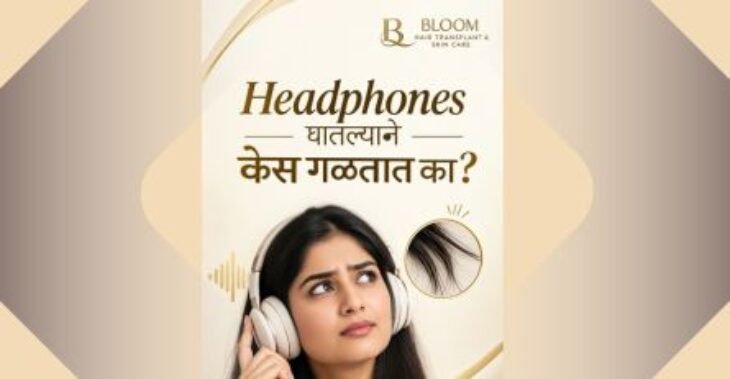
Can Wearing Headphones Cause Hair Loss?
Headphones have become a regular part of daily life. Many people use them while travelling, working, studying, attending online meetings, exercising, gaming or simply relaxing with music and videos.
Because headphones sit directly around or over the head, some people begin to wonder whether regular use could affect the scalp or hair follicles.
One common question is:
Can wearing headphones cause hair loss?
The short answer is that headphones are not considered a common direct cause of hair loss or baldness. However, the way headphones fit and how they are used may sometimes contribute to scalp discomfort, friction, pressure, sweating or mechanical stress around the areas where they contact the scalp and hair.
This distinction is important.
Most common hair loss is associated with factors such as genetics, hormones, age, nutritional issues, medical conditions, stress, certain medications and specific scalp disorders. Mechanical tension can also cause a form of hair loss called traction alopecia when hair or the scalp is repeatedly subjected to pulling or stress.
Therefore, if you have noticed thinning hair after becoming a regular headphone user, it is better not to assume that the headphones are automatically responsible.
The pattern of hair loss, the location of thinning, scalp symptoms, your family history and other recent changes in your health and lifestyle all matter when finding the actual cause.
Can Headphones Directly Cause Hair Loss?
There is no strong evidence that simply wearing normal headphones causes common male or female pattern hair loss.
For example, androgenetic hair loss is primarily associated with genetic and hormonal factors. It typically follows recognisable patterns such as a receding hairline, thinning around the crown or gradual reduction in hair density.
Headphones do not create this genetic pattern of hair loss.
However, there are situations where something associated with headphone use may affect the scalp or hair indirectly.
These may include:
- A very tight headphone band
- Continuous pressure on the same scalp area
- Repeated rubbing against the hair
- Excessive sweating under the headphones
- Scalp irritation
- Poor hygiene of headphone pads
- Wearing headphones over tightly pulled hairstyles
- Frequent adjustment or pulling of the headphones through the hair
These factors do not mean that headphones will cause baldness. They simply explain why some people may notice scalp discomfort, breakage or changes around areas repeatedly exposed to pressure or friction.
How Could Headphones Affect the Hair and Scalp?
Your hair follicles are located inside the scalp, while the visible hair shaft extends above the skin.
A headphone band or ear cup generally does not pull directly on individual follicles in the same way that a tight ponytail, braid or hair extension can.
However, repeated mechanical stress can still matter, particularly if the device is very tight or repeatedly rubs the same area.
The possible issues include:
Pressure
A tight headphone band can press against the scalp for long periods.
Friction
Repeated rubbing between the headphone material and hair can contribute to mechanical damage or breakage.
Heat
Closed headphone designs may increase warmth around the scalp, especially in India’s hot and humid weather.
Sweat
Long sessions can leave sweat trapped around the scalp and hairline.
Irritation
Dirty ear pads or headbands may contribute to scalp irritation in people with sensitive skin.
Hair tension
If you pull your hair tightly underneath headphones, the tension may come from the hairstyle rather than the headphones themselves.
This last point is particularly important. Repeated pulling or tension on the hair can cause traction alopecia, which may become permanent if the mechanical stress continues for a long time.
Can Tight Headphones Cause Traction Alopecia?
Traction alopecia is a type of hair loss caused by repeated tension or pulling on the hair and follicles.
It is more commonly associated with hairstyles such as tight ponytails, buns, braids, extensions and other practices that continuously pull on the roots.
Headphones alone are not a typical cause.
However, if headphones are worn over a tightly pulled hairstyle, the overall mechanical stress on certain areas of the scalp may increase.
For example, someone may tie their hair tightly backward, place a headphone band over the same region every day and continue the routine for months.
In such a situation, it is important to look at the entire hair-care routine rather than blaming the headphones alone.
Early traction-related hair loss may appear around areas that experience repeated tension. Symptoms can include broken hairs, thinning, a changing hairline, tenderness or scalp discomfort. Continued mechanical stress can make some forms of traction alopecia permanent.
Can Headphones Cause Hair Breakage?
Hair breakage is different from hair loss from the follicle.
When the hair shaft becomes weak or repeatedly experiences friction, individual strands can break.
This may make the hair appear thinner even though the follicles are still present.
You may notice:
- Short broken hairs
- Uneven hair length
- Frizz around the contact area
- Hair becoming rough or dry
- More strands breaking while combing
- Reduced appearance of density in a specific area
If the issue is primarily breakage, changing the mechanical stress and improving hair-care habits may help.
If actual thinning is occurring from the scalp, however, the underlying cause needs to be investigated.
This distinction is one reason why persistent hair loss should not be self-diagnosed based on one daily habit.
Does Wearing Headphones Cause Hair Thinning on the Crown?
Usually, headphones are not responsible for typical crown thinning.
Crown or vertex thinning is a common pattern in androgenetic hair loss, particularly in men. Gradual thinning may also occur in women, although the pattern can be different.
If you notice that the crown is becoming progressively less dense, especially when there is a family history of hair loss, it is better to consider common medical causes rather than assuming your headphones are responsible.
Look at the pattern carefully.
Hair loss that develops gradually over the crown is different from hair breakage or local irritation in an area where a headphone band repeatedly touches the scalp.
The location and pattern can provide useful clues during a professional hair and scalp evaluation.
Can Wearing Headphones Cause Hair Loss Around the Hairline?
The hairline can be affected by mechanical stress, but headphones are not the usual cause of hairline recession.
A receding hairline is commonly associated with androgenetic hair loss in men.
However, repeated pulling from hairstyles can also affect the frontal hairline. Tight hairstyles are a recognised cause of traction alopecia, and the hairline can be one of the first areas where this type of damage becomes visible.
If your headphones sit close to the forehead or repeatedly rub against the same area, you may notice irritation or broken hair.
But if the hairline is gradually moving backward, do not automatically blame your headphones.
A proper assessment can help distinguish between genetic hair loss, traction-related loss, breakage and other scalp conditions.
Does Wearing Headphones Increase Hair Shedding?
Normal daily hair shedding is different from progressive hair loss.
People naturally lose hair as part of the normal hair-growth cycle. The amount can vary from person to person and from one period of life to another.
If you notice more hair on your pillow, comb, bathroom floor or clothing, it does not automatically mean that the follicles are permanently being damaged.
Excessive shedding can occur after illness, fever, significant stress, weight changes, nutritional problems and other triggers. This type of temporary shedding is often called telogen effluvium.
This is why timing matters.
If heavy shedding started several weeks or months after an illness, major stress, significant weight loss or another health event, headphones may simply be receiving attention because they are part of your daily routine.
In situations involving noticeable Sudden Hair Shedding, it is more useful to investigate possible triggers than to assume that a particular device is the cause.
Can Sweating Under Headphones Cause Hair Loss?
Sweating itself does not normally cause permanent hair loss.
However, if you wear headphones for several hours, particularly during workouts or in a warm environment, sweat and heat can make the scalp uncomfortable.
In India, this can be particularly relevant during summer or in areas with high humidity.
Excess moisture may contribute to:
- Scalp discomfort
- Itching
- Greasiness
- Irritation
- Increased need for scalp cleansing
These problems should not be confused with conditions that directly cause follicle damage.
If you regularly experience scalp itching, redness, scaling, painful bumps or persistent inflammation, the underlying scalp problem should be evaluated rather than simply changing your headphones.
Can Dirty Headphones Affect Your Scalp?
Headphones come into regular contact with the skin and hair.
Over time, ear pads and headbands can accumulate sweat, oil, dust, product residue and other debris.
This does not mean dirty headphones will automatically cause hair loss.
However, maintaining clean equipment is sensible for general scalp and skin hygiene, particularly if you use the same headphones every day.
You can:
- Clean headphone surfaces according to the manufacturer’s instructions.
- Avoid sharing headphones unnecessarily.
- Allow damp ear pads to dry properly.
- Clean sweat from the headband after prolonged use.
- Avoid placing visibly dirty headphones directly on a freshly washed scalp.
- Replace worn or deteriorating pads when appropriate.
If cleaning your headphones does not resolve persistent scalp irritation, the problem may have another cause.
Can Tight Headphones Damage Hair Follicles?
The answer depends on the type and duration of mechanical stress.
A normal headphone band that rests comfortably on the head is unlikely to damage hair follicles simply because it touches the scalp.
A device that causes significant pain, pressure or repeated rubbing is different.
If you regularly experience discomfort exactly where the headphone band sits, consider whether the fit is too tight.
You can try:
- Adjusting the headband
- Choosing a lighter design
- Using a better-fitting model
- Taking regular breaks
- Avoiding prolonged pressure on one location
- Changing how your hair is positioned underneath the headphones
The aim is not to stop using headphones altogether. It is to minimise unnecessary mechanical stress.
What Are the Signs That Your Headphones May Be Irritating Your Scalp?
Pay attention if you notice symptoms specifically in the area where your headphones sit.
Possible warning signs include:
- Redness
- Tenderness
- Itching
- Burning sensation
- Repeated pressure marks
- Skin irritation
- Increased hair breakage around the contact area
- Localised thinning
- Hair becoming unusually fragile
If these symptoms disappear when you stop using the headphones and return when you start again, the device may be contributing to the irritation.
However, this does not prove that it is causing permanent hair loss.
Persistent or progressive thinning should be evaluated separately.
How to Wear Headphones Without Unnecessary Hair Stress
If you use headphones every day, a few simple habits can reduce mechanical stress on your hair and scalp.
Choose a comfortable fit
Your headphones should sit securely without squeezing your head.
A headphone band that causes pain or leaves significant pressure marks may need adjustment.
Avoid very tight hairstyles
If you have long hair, avoid tightly pulling it back every day underneath your headphones.
Repeated tension from hairstyles is a much more established cause of traction-related hair loss than ordinary headphone use.
Take breaks
If you use headphones for several hours for work or study, remove them during breaks.
This gives your scalp a period without pressure or friction.
Keep the device clean
Clean the parts that come into regular contact with your scalp and skin.
Manage sweat
After exercise or prolonged use, allow your scalp and headphones to dry properly.
Avoid repeatedly rubbing the same area
If your headphone band continuously catches or rubs your hair, adjust the position or consider a different design.
What If You Already Have Hair Loss?
If you are experiencing noticeable hair loss, do not assume that headphones are the cause simply because you wear them regularly.
Hair loss has many possible causes, including:
- Genetic hair loss
- Hormonal changes
- Stress
- Illness
- Nutritional deficiencies
- Thyroid problems
- Scalp conditions
- Certain medications
- Tight hairstyles
- Traction alopecia
- Alopecia areata
- Excessive hair shedding
A proper diagnosis starts with understanding the pattern and history of the hair loss.
For example, gradual thinning at the crown is different from sudden shedding throughout the scalp. Patchy hair loss is different from a slowly receding hairline. Hair breakage is different from loss of hair from the follicle.
Treatment should therefore be based on the cause rather than on assumptions.
Can Changing Headphones Stop Hair Loss?
If headphones are contributing to local irritation, pressure or mechanical stress, changing the fit or reducing use may help reduce that particular problem.
But changing headphones will not treat genetic hair loss, hormonal hair loss, nutritional deficiency or other medical causes.
This is an important distinction.
Suppose someone notices progressive thinning despite using comfortable headphones. Simply buying another pair may delay attention to the actual cause.
If hair loss continues, a specialist can assess the scalp and determine whether you are dealing with shedding, breakage, traction-related loss or another form of alopecia.
What Hair Care Habits Can Help Prevent Unnecessary Hair Damage?
Good hair care cannot prevent every type of hair loss, but it can reduce avoidable damage.
Consider the following habits:
Avoid excessive pulling
Repeated tight ponytails, buns and other styles that place tension on the roots can contribute to traction alopecia.
Be gentle while combing
Aggressive brushing can increase mechanical breakage.
Avoid unnecessary heat
Frequent high-heat styling can weaken the hair shaft.
Maintain scalp hygiene
Wash the scalp according to your hair type and scalp needs.
Eat a balanced diet
Adequate protein, iron and overall nutrition are important for healthy hair. Do not start high-dose supplements without understanding whether you actually have a deficiency.
Manage stress
Significant physical or emotional stress can contribute to temporary excessive shedding in some people.
Pay attention to scalp symptoms
Persistent dandruff, itching, redness or inflammation should not be ignored.
These basic habits are useful whether or not you use headphones.
When Should You See a Hair Specialist?
You should consider professional evaluation if you notice:
- Progressive thinning
- A receding hairline
- Noticeable crown thinning
- Bald patches
- Persistent excessive shedding
- Hair loss accompanied by scalp inflammation
- Pain or tenderness in areas of hair loss
- Broken hairs concentrated in one region
- Eyebrow or beard hair loss along with scalp changes
- Hair loss that continues despite changing your routine
Early evaluation can help identify the cause and prevent you from spending time on treatments that are not appropriate for your condition.
If treatment is recommended, it should be based on your diagnosis, age, pattern of loss, scalp condition and overall health.
For people exploring treatment options for established hair loss, it is important to understand that procedures such as transplantation are considered only for appropriate candidates and are not a solution for every type of shedding.
When researching specialist-led treatment, patients can also look at factors such as qualifications, treatment approach, experience and patient-care information. For example, someone researching a Hair transplant Surgeon in Mumbai should evaluate the medical credentials and treatment information rather than choosing a provider based only on promotional claims.
What If You Are Considering Hair Transplant Treatment?
A hair transplant is not normally considered simply because someone wears headphones or experiences temporary shedding.
Hair transplantation is generally discussed for selected patterns of permanent hair loss where adequate donor hair is available.
Before considering a procedure, the underlying cause of hair loss should be established.
Patients researching a Hair transplant clinic in Mumbai should therefore look beyond advertisements and understand whether the clinic explains diagnosis, suitability, treatment planning and follow-up care clearly.
The same principle applies to any specialist healthcare service.
Treatment should begin with understanding why the hair is thinning, not simply trying to restore hair without identifying the underlying problem.
Why Aftercare Matters in Hair Treatments
Hair and scalp treatments do not end when a procedure is completed.
Appropriate aftercare can be an important part of protecting the treated area and following the clinician’s instructions.
This is true across many areas of healthcare, and hair restoration is no exception. Patients researching hair transplant care should understand that aftercare recommendations can vary depending on the treatment performed and the individual’s condition.
For everyday headphone users, the same principle of gentle care applies.
Avoid unnecessary pressure, rubbing and irritation of the scalp, particularly if your scalp is already sensitive or you are undergoing a hair treatment.
Can Headphones Make Existing Hair Loss Look Worse?
Sometimes the answer may be visual rather than medical.
Headphones can flatten hair, separate strands or change the way hair sits on the scalp.
This can temporarily make areas of low density appear more noticeable.
For example, when hair is pressed down by a headphone band, the scalp may become easier to see.
This does not necessarily mean that more hair has been lost.
If you want to monitor genuine changes, look at your hair under similar conditions over time rather than judging it immediately after wearing headphones.
Take note of:
- Hairline position
- Crown density
- Parting width
- Overall shedding
- New short hair growth
- Changes in scalp condition
Consistent observation can provide more useful information than checking your hair repeatedly throughout the day.
Can Headphones Cause Permanent Baldness?
For most people, ordinary headphone use is not a recognised cause of permanent baldness.
Permanent hair loss is more commonly associated with conditions such as androgenetic hair loss or prolonged traction that damages the follicles.
This is why it is important not to confuse mechanical contact with established causes of hair loss.
A headphone band touching your scalp is not the same as repeatedly pulling the hair from its roots.
If you have progressive baldness, a receding hairline or crown thinning, look for the broader pattern rather than focusing on headphones alone.
How to Tell If Headphones Are Actually Related to Your Hair Problem
There are a few questions you can ask yourself:
Did the problem begin after changing your headphone design or fit?
Is irritation limited to the exact area where the headphones contact your scalp?
Do you wear your hair tightly underneath the headphones?
Is there actual thinning, or are you mainly noticing broken hairs?
Does the problem continue even when you stop wearing headphones for a period?
Are there other signs such as crown thinning, a receding hairline or widespread shedding?
The answers can help you understand whether the headphone routine might be contributing to a local problem or whether another cause deserves attention.
However, these questions cannot replace a professional diagnosis.
Conclusion
So, can wearing headphones cause hair loss?
For most people, ordinary headphone use is not a direct cause of common hair loss or baldness.
However, very tight headphones, repeated friction, pressure, sweating, scalp irritation or wearing them over tightly pulled hairstyles may contribute to hair or scalp problems in some individuals.
The more important point is not to blame headphones automatically when hair starts falling.
Hair loss can have many causes, including genetics, hormonal changes, illness, stress, nutritional problems, scalp conditions and mechanical tension.
If you notice gradual thinning, a receding hairline, crown hair loss, patchy bald spots or persistent excessive shedding, it is worth finding the actual cause.
Simple changes such as choosing a comfortable headphone fit, taking breaks, avoiding tight hairstyles and keeping your scalp and headphones clean can reduce unnecessary mechanical stress.
Most importantly, persistent hair loss should be assessed based on its pattern and underlying cause rather than attributed to one everyday habit.
Frequently Asked Questions
1. Can wearing headphones cause hair loss?
Ordinary headphone use is not considered a common direct cause of hair loss. However, very tight headphones or repeated friction and pressure may contribute to scalp irritation or hair breakage. If headphones are worn over tightly pulled hair, the overall mechanical stress may also contribute to traction-related hair loss.
2. Can headphones cause bald spots?
Headphones are not a typical cause of bald spots. Patchy hair loss can have several causes, including alopecia areata, scalp conditions and mechanical damage. If a bald patch develops or continues to expand, it should be professionally evaluated rather than automatically attributed to headphone use.
3. Should I stop wearing headphones if my hair is falling out?
You do not necessarily need to stop using headphones. First check whether they are too tight, causing irritation or repeatedly rubbing the same area. Also consider other common causes of hair loss. If shedding or thinning continues, a hair and scalp evaluation can help identify the actual cause.