

Subtle Signs of Hair Thinning You Shouldn’t Ignore
Hair plays a major role in appearance, confidence, and self-image. While losing a few strands daily is completely normal, gradual hair thinning often goes unnoticed until visible scalp exposure or reduced hair density becomes difficult to hide. Many people ignore the early warning signs of thinning hair because the changes happen slowly over time.
Hair thinning is not the same as sudden hair loss. It is usually a gradual reduction in hair density, volume, and strength that may affect men and women differently. In many cases, identifying the early signs can help individuals take timely action and improve long-term hair health outcomes.
Modern lifestyles, stress, hormonal changes, poor nutrition, pollution, and genetics are all contributing factors behind increasing cases of hair thinning in India. Unfortunately, people often wait until bald patches or severe shedding appear before seeking help.
Understanding the subtle signs of thinning hair can help prevent progression and allow earlier intervention. This article explores the most common early symptoms of hair thinning, why they occur, possible causes, and when to seek professional advice.
Understanding Hair Thinning
Hair thinning refers to a gradual decrease in hair density across the scalp. Unlike complete baldness, thinning hair develops slowly and may initially appear as reduced volume or weaker strands.
Hair grows in cycles:
- Growth phase
- Transition phase
- Resting phase
- Shedding phase
When this cycle becomes disrupted, hair may shed faster than it grows back, leading to visible thinning over time.
Hair thinning can affect:
- The hairline
- Crown area
- Temples
- Entire scalp
The pattern often depends on the underlying cause.
Why Early Detection Matters
Ignoring early signs of hair thinning can allow the condition to worsen over time. In many cases, early intervention helps:
- Preserve existing hair
- Improve scalp health
- Slow further thinning
- Increase treatment effectiveness
The sooner the cause is identified, the better the chances of maintaining healthy hair density.
1. Increased Hair Shedding During Washing
One of the earliest warning signs is noticing more hair strands while washing or conditioning your hair.
Although shedding some hair is normal, excessive shedding may indicate:
- Stress-related hair fall
- Nutritional deficiencies
- Hormonal imbalance
- Early pattern hair loss
If the amount of hair shedding continues consistently for weeks, it should not be ignored.
2. Wider Hair Parting
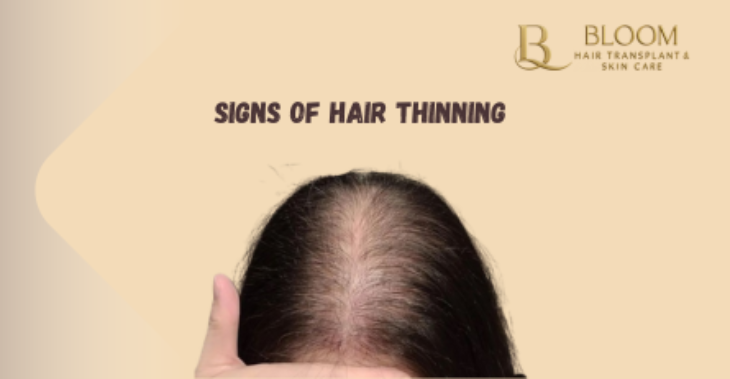
A widening hair partition is a subtle but common sign of thinning hair, especially in women.
You may notice:
- More visible scalp along the partition
- Difficulty styling the hair normally
- Reduced density around the crown area
This change often develops gradually, making it easy to overlook initially.
3. Reduced Hair Volume
Hair may begin to feel less dense than before.
Common observations include:
- Ponytail becoming thinner
- Hair lacking fullness
- Flat appearance even after styling
Reduced volume is often one of the first visible indicators of ongoing thinning.
4. Excessive Hair on Pillow or Floor
Finding hair strands occasionally is normal, but persistent accumulation on:
- Pillows
- Floors
- Clothing
- Combs
may suggest abnormal shedding.
This can indicate disruption in the hair growth cycle.
5. Receding Hairline
A slowly receding hairline is a common sign of thinning in men but may also occur in women.
You may notice:
- More prominent forehead
- Uneven hairline shape
- Hair thinning near temples
This often develops gradually over months or years.
6. Increased Scalp Visibility
As hair density reduces, the scalp may become more noticeable under bright light or while styling.
This is especially common around:
- Crown region
- Hair partition
- Front scalp area
Increased scalp visibility is often a strong indicator of progressing hair thinning.
7. Weak and Fragile Hair Strands
Hair thinning is not always about hair quantity. Hair quality may also change.
Signs include:
- Easily breakable strands
- Dry texture
- Lack of shine
- Hair becoming finer over time
Weak hair strands are more vulnerable to shedding and breakage.
8. Slower Hair Growth
If your hair seems to stop growing at its usual rate, it could indicate weakened follicles.
Hair may:
- Grow more slowly
- Appear thinner at the ends
- Lose overall length over time
This often accompanies chronic thinning conditions.
9. Difficulty Styling Hair
Many individuals first notice thinning hair when hairstyles no longer look the same.
You may experience:
- Reduced coverage
- Difficulty achieving volume
- Hairstyles appearing flatter
These subtle changes often indicate declining hair density.
Common Causes of Hair Thinning
Hair thinning can occur due to multiple factors.
Genetic Hair Loss
Hereditary hair loss is one of the most common causes.
This condition gradually affects hair follicles over time and may lead to:
- Male pattern baldness
- Female pattern hair thinning
Stress and Lifestyle Factors
Physical or emotional stress can disrupt the hair growth cycle.
Common triggers include:
- Lack of sleep
- Emotional stress
- Illness
- Rapid weight loss
Nutritional Deficiencies
Hair health depends on proper nutrition.
Deficiencies in:
- Iron
- Protein
- Vitamin D
- Zinc
may contribute to hair thinning.
Hormonal Changes
Hormonal fluctuations can affect hair growth patterns.
Common causes include:
- Thyroid imbalance
- Pregnancy
- Menopause
- PCOS
Excessive Hair Treatments
Frequent chemical treatments, heat styling, and harsh hair products may weaken hair over time.
Scalp Conditions
Poor scalp health can interfere with healthy hair growth.
Conditions such as dandruff or scalp inflammation may contribute to thinning.
Hair Thinning in Men vs Women
Hair thinning patterns often differ between men and women.
In Men
Men commonly experience:
- Receding hairline
- Crown thinning
- Progressive baldness
In Women
Women usually notice:
- Widening partition
- Overall thinning
- Reduced volume without complete baldness
Emotional Impact of Hair Thinning
Hair thinning can affect emotional well-being and confidence.
Many individuals experience:
- Self-consciousness
- Anxiety
- Reduced self-esteem
- Social discomfort
Addressing thinning early may help reduce emotional stress associated with hair loss.
Can Hair Thinning Be Reversed?
The possibility of reversing hair thinning depends on the underlying cause.
In some cases, improving lifestyle factors and scalp health may help restore hair density.
Early intervention often provides better results than waiting until advanced hair loss occurs.
Healthy Habits to Support Hair Growth
Maintaining healthy hair requires consistent care and lifestyle habits.
Eat a Balanced Diet
Include foods rich in:
- Protein
- Iron
- Vitamins
- Healthy fats
Nutrition plays a major role in hair health.
Reduce Stress
Managing stress through relaxation techniques, exercise, and adequate sleep may help reduce hair shedding.
Avoid Harsh Hair Practices
Limit excessive:
- Heat styling
- Tight hairstyles
- Chemical treatments
Maintain Scalp Health
A clean and healthy scalp supports stronger hair growth.
Stay Hydrated
Proper hydration supports overall body and scalp health.
When Should You Seek Professional Advice?
It is important to seek evaluation if you notice:
- Persistent hair shedding
- Rapid thinning
- Bald patches
- Itching or scalp irritation
- Sudden changes in hair texture
Early assessment helps identify underlying causes and improve management outcomes.
Treatment Approaches for Hair Thinning
Treatment options vary depending on the cause and severity of thinning.
Approaches may include:
- Lifestyle changes
- Nutritional support
- Scalp treatments
- Medical therapies
- Hair restoration procedures
Treatment plans are often personalized based on individual needs.
Preventing Further Hair Thinning
Although not all hair thinning can be prevented, certain steps may reduce progression.
Helpful measures include:
- Early intervention
- Healthy nutrition
- Stress management
- Gentle hair care routines
- Regular scalp care
Consistency is key to maintaining healthier hair over time.
Hair thinning often develops gradually, making it easy to ignore the early warning signs. Increased shedding, reduced volume, widening partitions, fragile strands, and visible scalp changes may all indicate the beginning stages of thinning hair.
Recognizing these subtle symptoms early can help individuals take proactive steps before the condition progresses further. Since hair thinning can result from various factors including genetics, stress, hormonal imbalance, and lifestyle habits, identifying the root cause is important for effective management.
Healthy habits, proper scalp care, balanced nutrition, and timely professional guidance can significantly support long-term hair health. Paying attention to the early signs today may help preserve stronger, healthier hair in the future.
FAQs
1. Is hair thinning reversible?
Hair thinning may improve depending on the underlying cause and how early it is addressed.
2. How much hair fall is considered normal?
Losing around 50–100 hair strands daily is generally considered normal.
3. Can stress cause hair thinning?
Yes, physical and emotional stress can disrupt the hair growth cycle and contribute to excessive shedding and thinning.